
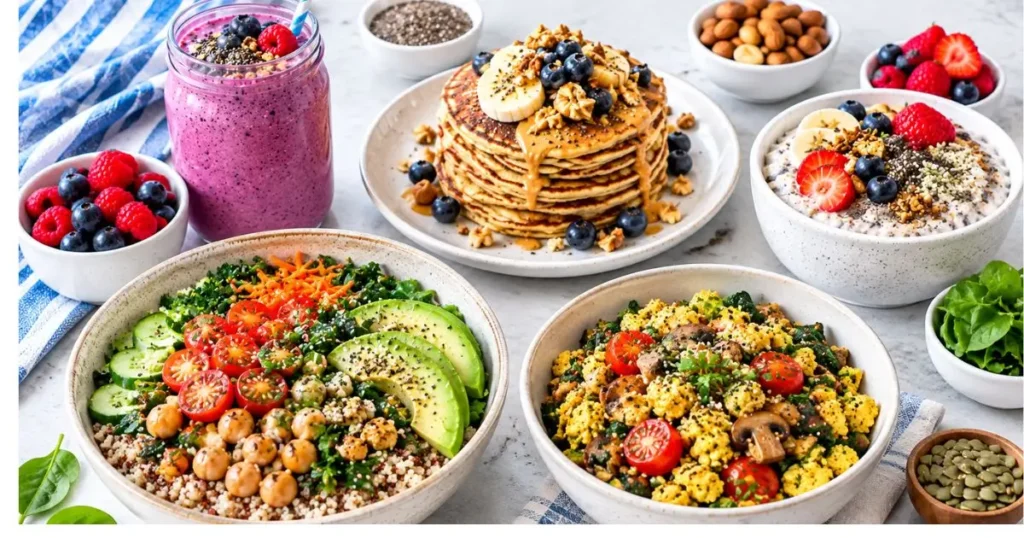
Finding delicious high-protein breakfast ideas without gluten, dairy, or eggs can feel limiting at first. Traditional choices such as yogurt bowls, cheese toast, scrambled eggs, and many baked breakfast foods might not suit your dietary needs. However, you can still build satisfying meals with ingredients such as tofu, beans, chickpeas, seeds, nuts, and naturally gluten-free grains.
The key is to focus on foods that naturally meet your dietary requirements rather than relying entirely on specialty substitutes. With the right combinations, these nutritious options can provide protein, fiber, healthy fats, and other essential nutrients without making meal preparation complicated.
Whether you want something sweet, savory, quick, or suitable for meal preparation, these 12 breakfast ideas offer practical ways to add variety to your diet.
How to Build a High-Protein Breakfast Without Gluten, Dairy, or Eggs
A balanced and healthy breakfast starts with choosing ingredients that complement one another. Instead of replacing gluten, dairy, and eggs individually, you can build your meal around a reliable protein source, a suitable carbohydrate, and nutrient-rich additions.
Here are four ingredient groups to consider:
- Plant-based protein: Tofu, tempeh, chickpeas, beans, lentils, and soy products.
- Gluten-free carbohydrates: Quinoa, buckwheat, potatoes, sweet potatoes, and appropriately labeled gluten-free oats.
- Healthy fats: Chia seeds, flaxseeds, walnuts, almonds, avocado, and nut or seed butter.
- Fruits and vegetables: Berries, bananas, spinach, tomatoes, peppers, and other produce.
Adding these ingredients could make breakfast more nutritionally balanced. For instance, tofu with potatoes and vegetables provides protein and carbohydrates, while chia pudding made with fortified soy milk can contribute protein, fiber, and calcium.
Your protein needs depend on factors such as body size, activity level, age, and overall dietary intake. Rather than assuming every breakfast needs the same amount, consider your personal and individual requirements and the protein content of the ingredients you use.
12 High-Protein Gluten-, Dairy- and Egg-Free Breakfast Ideas
These options include sweet and savory meals, make-ahead recipes, and quick combinations. Choose based on your preferences, preparation time, and nutritional goals.
1. Tofu Scramble With Vegetables
Tofu scramble is one of the most versatile alternatives to scrambled eggs. Firm tofu provides plant-based protein, while vegetables contribute fiber, vitamins, and minerals.
Ingredients:
- Firm tofu
- Spinach, bell peppers, and tomatoes
- Olive oil
- Turmeric, black pepper, and garlic powder
- Salt to taste
How to prepare it:
Crumble the tofu into a heated pan with a small amount of olive oil. Add your vegetables and seasonings, then cook until the vegetables soften and the tofu heats through.
Serve it with roasted potatoes or a side of fruit for a more complete meal.
Why it works: Tofu offers a substantial protein base without eggs or dairy. The amount of protein depends on the tofu variety and portion size, so check the package nutrition information when tracking your intake.
2. High-Protein Smoothie With Soy Milk and Nut Butter
A smoothie can provide a convenient breakfast when you have limited preparation time. The ingredients you select determine whether it supplies a required amount of protein or not.
Ingredients:
- Unsweetened soy milk
- One banana or a handful of berries
- Peanut or almond butter
- Chia seeds
- Optional plant-based protein powder
Blend the ingredients until smooth. If you use protein powder, select a product that fits your dietary requirements and check its ingredient and allergen information.
Why it works: Soy milk generally provides more protein than almond or coconut milk, although amounts can vary product to product. Nut butter and chia seeds add healthy fats and fiber, while fruit contributes carbohydrates and micronutrients.
For a thicker smoothie, use frozen fruit instead of ice.
3. Gluten-Free Overnight Oats With Chia Seeds
Overnight oats provide a simple make-ahead option that requires little preparation when you’re ready to eat.
Ingredients:
- Certified or appropriately labeled gluten-free oats
- Unsweetened fortified soy milk
- Chia seeds
- Berries or sliced banana
- Peanut butter or almond butter
Combine the oats, soy milk, and chia seeds in a container. Refrigerate overnight, then add the fruit and nut butter before serving.
Why it works: Oats provide carbohydrates and fiber, while soy milk, chia seeds, and nut butter contribute protein. The final protein content depends on the quantities used.
Oats are naturally gluten-free, but cross-contact with wheat, barley, or rye can occur during production. If you have celiac disease, choose oats labeled gluten-free and never avoid to follow your healthcare professional’s guidance about including them in your diet.
4. Chickpea Flour Pancakes
Pancakes do not require eggs, dairy milk, or wheat flour. Chickpea flour creates a savory pancake that works well with vegetables and herbs.
Ingredients:
- Chickpea flour
- Water
- Chopped spinach or bell peppers
- Fresh herbs
- Olive oil
- Salt and spices
Mix the chickpea flour with water until you have a smooth batter. Fold in the vegetables and seasonings, then cook small portions in a lightly oiled skillet until both sides are cooked through.
Why it works: Chickpea flour provides plant protein and fiber. These pancakes can be served with avocado, tomato salsa, or a side of beans to make the meal more substantial.
Check the flour label if you need to avoid gluten strictly, especially when purchasing products processed in shared facilities.
5. Chia Pudding With Fortified Soy Milk
Chia pudding is an easy option to prepare in advance, and its ingredients can be adjusted to suit different tastes.
Ingredients:
- Chia seeds
- Unsweetened fortified soy milk
- Vanilla extract
- Cinnamon
- Berries or chopped nuts
Mix the chia seeds with soy milk and vanilla. Refrigerate for several hours or overnight, stirring again after the mixture begins to thicken. Add cinnamon, fruit, or nuts before serving.
Why it works: Chia seeds provide fiber, plant-based omega-3 fatty acids, and some protein. Soy milk contributes additional protein, and a fortified variety may provide calcium and vitamin D.
Chia pudding made with coconut or almond milk can also work, but those beverages typically contain less protein than soy milk. Check the nutrition label to compare products.
6. Quinoa Breakfast Bowl
Quinoa is a naturally gluten-free grain-like seed that can be used in both sweet and savory breakfasts.
Ingredients:
- Cooked quinoa
- Unsweetened soy milk or water
- Cinnamon
- Chopped walnuts or almonds
- Berries or sliced apple
Warm the cooked quinoa with a little soy milk or water. Add cinnamon, fruit, and nuts, then serve.
For a savory variation, combine quinoa with tofu, spinach, and roasted vegetables.
Why it works: Quinoa provides carbohydrates, fiber, and some protein. Adding soy milk, tofu, or nuts increases the protein content and makes the meal more substantial.
Cooking quinoa in advance can reduce preparation time. Refrigerate leftovers promptly and use them within an appropriate food-storage period.
7. Sweet Potato and Black Bean Breakfast Bowl
A sweet potato and black bean bowl combines plant protein, fiber-rich carbohydrates, and healthy fats in one meal.
Ingredients:
- Cooked sweet potato
- Black beans
- Avocado
- Diced tomatoes
- Lime juice
- Cumin and black pepper
Cube the cooked sweet potato and combine it with warmed black beans. Add tomatoes, avocado, lime juice, and seasonings.
Why it works: Black beans contribute protein and fiber, while sweet potatoes supply carbohydrates and nutrients such as beta-carotene. Avocado adds unsaturated fat.
For additional protein, include a serving of tofu or tempeh. This is also a useful way to turn leftover vegetables and beans into a satisfying breakfast.
8. Tofu and Avocado Breakfast Toast
You do not have to give up toast when avoiding gluten. Gluten-free bread can provide a suitable base for a protein-rich topping.
Ingredients:
- Gluten-free bread
- Firm tofu
- Avocado
- Lemon juice
- Black pepper
- Hemp seeds, if desired
Toast the bread according to the package instructions. Mash the avocado with lemon juice and black pepper, then spread it over the toast. Add cooked, seasoned tofu and sprinkle with hemp seeds.
Why it works: Tofu supplies the main protein source, while avocado contributes unsaturated fat. Gluten-free bread provides carbohydrates, although its fiber and protein content varies considerably between brands.
If you have celiac disease, check the bread label and take precautions against cross-contact from shared toasters, utensils, and preparation surfaces.
9. High-Protein Dairy-Free Yogurt Bowl
A yogurt bowl could still be part of a dairy-free diet. The important distinction is choosing a product that provides enough protein rather than assuming every plant-based yogurt offers the same nutritional benefits.
Ingredients:
- Unsweetened soy yogurt
- Chia seeds
- Pumpkin seeds
- Berries
- Almonds or walnuts
Place the yogurt in a bowl and add the seeds, fruit, and nuts. Choose unsweetened yogurt if you want to limit added sugars.
Why it works: Soy yogurt often provides more protein than coconut-based yogurt, but formulations vary. Pumpkin seeds, chia seeds, and nuts add protein, fiber, and fats.
Check the label for milk ingredients, gluten-related information, and other allergens relevant to your diet.
10. Chickpea and Vegetable Breakfast Hash
A breakfast hash offers a savory alternative to cereal, smoothies, and sweet breakfast bowls.
Ingredients:
- Cooked chickpeas
- Diced potatoes
- Bell peppers
- Red onion
- Spinach
- Olive oil and spices
Cook the potatoes in a skillet until tender and lightly browned. Add the onion, bell peppers, chickpeas, and seasonings. Stir in spinach toward the end and cook until wilted.
Why it works: Chickpeas contribute plant protein and fiber, while potatoes provide carbohydrates. Vegetables add variety and micronutrients.
For a higher-protein version, add crumbled tofu or tempeh. You can also prepare the potatoes and chickpeas in advance to make assembly quicker.
11. Peanut Butter and Banana Protein Oatmeal
Oatmeal can be a useful foundation for breakfast, but oats alone may not provide as much protein as you need for a protein-focused meal.
Ingredients:
- Gluten-free oats
- Fortified soy milk
- Peanut butter
- Sliced banana
- Ground flaxseed
- Optional plant-based protein powder
Cook the oats in soy milk according to the package instructions. Stir in peanut butter and flaxseed, then top with banana.
If you use protein powder, follow the product’s serving instructions and mix it in as directed.
Why it works: Oats provide fiber and carbohydrates, while soy milk and peanut butter increase protein. Flaxseed adds fiber and plant-based omega-3 fatty acids.
Choose an unsweetened soy beverage and adjust the banana and other toppings to your taste and nutritional goals.
12. Tempeh Breakfast Wraps With Gluten-Free Tortillas
Tempeh offers another useful plant-based protein source. Its firm texture makes it suitable for savory breakfast wraps.
Ingredients:
- Tempeh
- Gluten-free tortillas
- Bell peppers and onions
- Spinach
- Avocado
- Olive oil and seasonings
Slice the tempeh and cook it in a skillet with olive oil and seasonings. Add the vegetables and cook until tender. Fill the tortillas with the tempeh mixture, spinach, and avocado.
Why it works: Tempeh supplies protein, while vegetables and avocado add fiber, nutrients, and unsaturated fats. Gluten-free tortillas provide a convenient wrap, although their nutritional content differs by brand.
Check the tortilla and tempeh labels for ingredients that conflict with your dietary restrictions.
Which Breakfast Ideas Provide the Most Protein?
The protein content of a meal depends on the portion size, preparation method, and specific products used. The following comparison identifies the main protein sources in each option rather than assigning unsupported protein totals.
| Breakfast idea | Main protein source | Preparation |
|---|---|---|
| Tofu scramble | Firm tofu | Cook fresh |
| Protein smoothie | Soy milk and optional protein powder | Blend |
| Overnight oats | Soy milk, oats, and chia seeds | Prepare ahead |
| Chickpea pancakes | Chickpea flour | Cook fresh |
| Chia pudding | Soy milk and chia seeds | Prepare ahead |
| Quinoa bowl | Quinoa, soy milk, or tofu | Batch-cook quinoa |
| Sweet potato bowl | Black beans | Assemble and warm |
| Avocado toast | Tofu | Toast and assemble |
| Dairy-free yogurt bowl | Soy yogurt and seeds | No cooking |
| Chickpea hash | Chickpeas and optional tofu | Cook or reheat |
| Protein oatmeal | Soy milk and peanut butter | Cook fresh |
| Tempeh wrap | Tempeh | Cook and assemble |
For a more protein-dense breakfast, prioritize tofu, tempeh, soy milk, soy yogurt, beans, and chickpeas. Seeds and nuts can contribute additional protein, but they also contain substantial amounts of fat and calories. If you need a specific protein target, calculate the total using the nutrition labels and actual serving sizes.
How to Prepare These Breakfasts With Less Effort
You do not need to cook a completely different meal every day to maintain variety. Preparing a few ingredients ahead of time makes it easier to combine them in different ways.
Try these practical steps:
- Cook a batch of protein-rich foods. Prepare tofu, chickpeas, or beans for use in bowls, hashes, and wraps.
- Prepare suitable carbohydrates. Cook quinoa, roast sweet potatoes, or portion gluten-free oats into containers.
- Keep simple toppings available. Store washed fruit, avocado, seeds, and nut butter where they are easy to access.
- Prepare one make-ahead breakfast. Overnight oats and chia pudding can be refrigerated for convenient serving.
- Alternate sweet and savory meals. Switch between smoothies, oatmeal, tofu scrambles, and bean bowls to avoid relying on one recipe.
Refrigerate cooked foods promptly in covered containers and follow appropriate food-safety guidance. Preparing ingredients in advance should simplify meals without compromising safe storage.
Important Dietary Considerations
Avoiding gluten, dairy, and eggs requires more than choosing foods that appear suitable. If you have celiac disease or a diagnosed food allergy, ingredients and food preparation practices matter.
Check Gluten-Free Labels
Oats, breads, tortillas, flour blends, and packaged breakfast products can be exposed to gluten during processing. In the United States, the FDA permits a voluntary gluten-free claim on foods that meet its regulatory requirements, including a limit of less than 20 parts per million of gluten.
Read the FDA’s guidance on gluten-free food labeling if you need to understand these requirements.
Distinguish Dairy-Free From Lactose-Free
Lactose-free milk still contains milk proteins and is not suitable for someone with a milk allergy. If you must avoid dairy, choose products that do not contain milk ingredients and review allergen information.
Do Not Assume Plant-Based Means Allergen-Free
Plant-based products may contain gluten or other ingredients you need to avoid. Check the ingredient list and allergen statements on breads, protein powders, yogurt alternatives, and packaged meat substitutes.
Also prevent cross-contact by cleaning utensils, cookware, counters, and shared preparation surfaces when necessary.
Pay Attention to Overall Nutrition
Removing several food groups can make it harder to meet certain nutritional needs, depending on the foods you eat instead. Fortified plant beverages, legumes, tofu, nuts, seeds, fruits, and vegetables can help provide a broader range of nutrients.
If you avoid dairy, check your intake of calcium and vitamin D. If you follow a strict gluten-free diet, pay attention to fiber and the nutrients supplied by whole grains and fortified foods. A registered dietitian can help you plan a balanced diet, particularly if you have multiple diagnosed allergies or celiac disease.
Frequently Asked Questions
What can I eat for breakfast if I cannot have gluten, dairy, or eggs?
You can choose tofu scramble, chickpea pancakes, gluten-free overnight oats, chia pudding, quinoa bowls, sweet potato and bean bowls, or smoothies made with suitable plant-based ingredients. Combine a protein source with fruit, vegetables, or a suitable carbohydrate for a more balanced meal.
What is the best high-protein breakfast without gluten, dairy, or eggs?
There is no single best option for everyone. Tofu scramble, tempeh wraps, and chickpea bowls are useful savory choices, while soy-based smoothies and overnight oats work well for people who prefer sweeter meals. The best choice depends on portion size, protein content, preparation time, and personal nutritional needs.
How can I get enough protein without eggs or dairy?
Build meals around tofu, tempeh, legumes, soy milk, and soy yogurt. Chickpeas, beans, quinoa, nuts, and seeds can contribute additional protein. If you need a higher protein intake, a suitable plant-based protein powder may help, provided its ingredients meet your dietary requirements.
Are oats safe for a gluten-free diet?
Oats are naturally gluten-free, but cross-contact with gluten-containing grains can occur during production. People with celiac disease should choose appropriately labeled gluten-free oats and follow individualized medical guidance about their use.
Can I lose weight while eating gluten-, dairy-, and egg-free breakfasts?
Yes. Weight loss depends primarily on maintaining an appropriate overall energy intake, alongside factors such as physical activity and individual health needs. These breakfasts can support a weight-management plan when portions and ingredients fit your needs, but excluding gluten, dairy, and eggs does not automatically lead to weight loss.
What is a quick high-protein breakfast without gluten, dairy, or eggs?
A smoothie made with soy milk, suitable plant-based protein powder, and nut butter is one option. A soy yogurt bowl with seeds or overnight oats prepared in advance can also be convenient. Compare product labels to determine which option supplies the amount of protein you need.
Conclusion
Preparing high-protein, gluten-free, dairy-free, and egg-free breakfasts does not require expensive substitutes or complicated recipes. Whole-food ingredients like tofu, tempeh, chickpeas, beans, and gluten-free grains provide practical foundations for a varied morning routine.
By pairing these protein sources with suitable carbohydrates, healthy fats, and vegetables, you can easily build balanced, nutritious meals that support your health goals.